The Photographer, the Photograph, and What We Leave Behind
During my sit-down with Jessica, I learned a lot about how an artist's journey begins—what that beginning looks like, how it progresses, and how it eventually evolves into something more personal and individual. I think her journey is one that many artists can recognize. She originally came from theater before picking up a camera. She learned the settings, learned the technical aspects, and gradually became a photographer. At some point, the camera simply stuck with her.
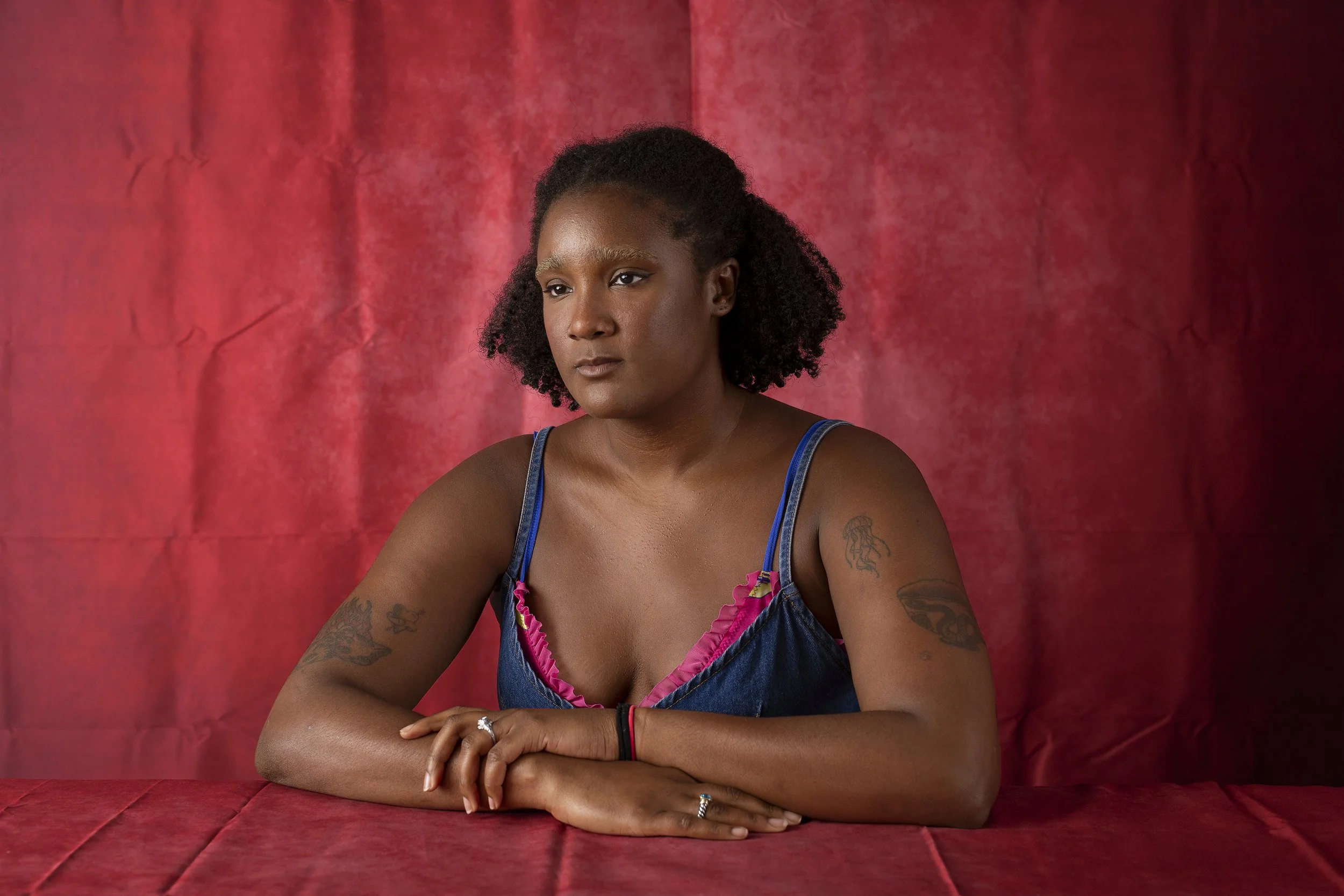
Stories Under A Tent: Jessica Turner
When she told me about being laid off from her position as a photographer, I began thinking about the larger changes that have taken place within photography, particularly in the news industry. Many organizations have reduced their photography staffs and increasingly rely on images produced by independent photographers and journalists. Somewhere along the way, it can feel as though the position of the photographer became less necessary—not because the photograph itself became unnecessary, but because it became easier for institutions to purchase an image than to maintain the person whose job was to go out and make it. That distinction interests me. The photograph remains valuable, but the photographer can become invisible.
Jessica also spoke about some of the internal struggles that come with photography. There are so many possible directions one can take. You can teach yourself. You can go to school. You can pursue photography academically and develop a deeper understanding of the medium and its history. There is no single path toward becoming a photographer.
I understand that personally. I went to school for photography, although photography was not originally what I intended to study. I started as a graphic and web designer. Before classes began, I decided to transition into photography because I happened to have a camera and had already been taking pictures for a few months. In some ways, though, I had been taking pictures my entire life. Around 2011, I began paying closer attention to art. In high school, I occasionally took photographs for the journalism department, even though I wasn't actually a student in the class. I helped out with the department and photographed different events. My football coach was also a photographer and took many of the photographs for the teams. Through an after-school program, I began learning photography and editing. At the time, I think photography was also a way of escaping. It gave me somewhere to be. It kept me occupied after school and gave me a reason not to immediately return home—to step outside of whatever life was waiting for me there.
In 2014, I went to school for photography in Dallas, Texas. There, I learned the technical foundations of the camera. We spent a great deal of time simply learning how to shoot: understanding the camera, getting comfortable holding it, going outside, looking for things that interested us, and developing a sense of how to see. Only later did we begin learning what happened after the photograph was made. We learned color correction, sizing, cropping, and post-production. We studied alternative photographic processes such as cyanotype. We learned the history of photography and looked at some of its earliest forms. We studied photographers across different genres and disciplines—James Nachtwey in photojournalism, Irving Penn and Richard Avedon in fashion, and photographers such as Mathew Brady, whose work became an important historical record of war. School gave me something that simply taking pictures could not. It expanded my understanding of the medium. It introduced me to photographers I might not have encountered otherwise. It encouraged me to research, experiment, question, and think about photography beyond the act of making an image. For a long time, however, I simply took pictures.
I consistently found myself returning to portraits. I occasionally photographed products, still lifes, food, or journalistic subjects, but photographing people was what stayed with me. Between roughly 2019 and 2021, I began to understand more clearly what kind of photography I wanted to invest myself in. "Portrait photographer" was the broadest label that seemed to fit, but eventually even that felt incomplete. I realized that I didn't simply want to photograph people. I wanted to document their stories. I wanted to know where people came from. I wanted to understand their backgrounds, what motivated them, what kind of work they did, and what experiences shaped them. The photograph became only one part of the documentation. I began attaching stories to the images—writing blog posts, creating captions, and finding ways to give context to the person who existed inside the frame.
My photography continued to evolve. Eventually, I picked up another camera, this time to work with film and moving images. Film felt like another extension of the same impulse to document people. A photograph could show me what someone looked like, but moving images gave me something else: their voice, their expressions, their mannerisms, their pauses, and their moods. Twenty-four frames per second gave the photograph a pulse. I began thinking of myself as a photographer first and a director second. I never felt entirely comfortable calling myself a videographer. Film, for me, was an extension of photography rather than a replacement for it. I became more interested in directing, creating scenes, constructing environments, and giving people a space in which they could sit in front of a microphone and speak.
The medium changed, but the question remained the same: Who is this person, and what can I learn from their existence? Jessica also mentioned that after graduating, she was surprised to discover that some of her professors were still actively making work. That observation stayed with me because I think many people assume that once an artist becomes an educator, teaching somehow replaces making. We imagine the professor standing outside of the practice, passing knowledge down to the next generation. But artists don't necessarily stop being artists when they become teachers.
A few years ago, I went to an exhibition featuring the work of one of my late professors. I had seen some of his work before, but seeing it in an exhibition was different. Standing in front of the physical photographs gave the work a kind of intimacy and presence that reproductions cannot completely reproduce. There was something about being physically near the photographs—seeing them up close and experiencing them as objects—that made the work feel alive. I remember asking him if he would ever want to collaborate with me on a series. He said he would be open to it when he had the time, but for the moment, he wanted to continue making his own work.
At the time, I understood that as a simple answer. Looking back, I think it was something deeper. He had reached a point in his life where creating a body of work was no longer simply about professional advancement or recognition. He wanted to leave something behind. That realization felt almost like an epiphany. Here was a photographer who spent his life teaching other people how to understand photography, yet he was still searching for opportunities to create. He was still making photographs, still building a body of work, still trying to leave evidence of his existence through the medium. And perhaps that is one of the strange contradictions of being an artist. We spend our lives teaching others how to see, while simultaneously trying to make sure that something of the way we saw the world survives us. Eventually, we disappear. Our possessions remain for a while. Our photographs remain. Our writings may remain. But perhaps the most significant things we leave behind are the memories that exist in other people. People remember:
the way we spoke.
a conversation.
being photographed.
how we made them feel.
And sometimes, an artist tries to give those memories another form.
A photograph can become evidence that a person was here. A body of work can become a record of how someone saw the world while they were alive. It can say: I was here. I looked at this. I cared about this. This is what I believed was worth remembering. That is what I found so moving about my professor's desire to continue making work. It wasn't simply about photography. It was about presence. It was about the possibility that long after the photographer is gone, the work might remain as a trace of the life that produced it. I found that both sad and beautiful. Perhaps that is one of the reasons I continue to photograph people. At first, I thought I was interested in portraits because I was interested in people. But the longer I work, the more I wonder if the deeper impulse is something else. Maybe photography is not only about seeing people. Maybe it is about remembering them. And perhaps, in the end, it is also about asking what it means to be remembered ourselves.
